
Travel Planning · 2026-11-17
Adam's Peak Season 2026/27: When Sri Pada Opens and How to Climb It
Sri Pada's 2026/27 season opens on 23 December 2026 and runs to Vesak Poya in May 2027. Hatton and Ratnapura routes, sunrise timing, and the road there.
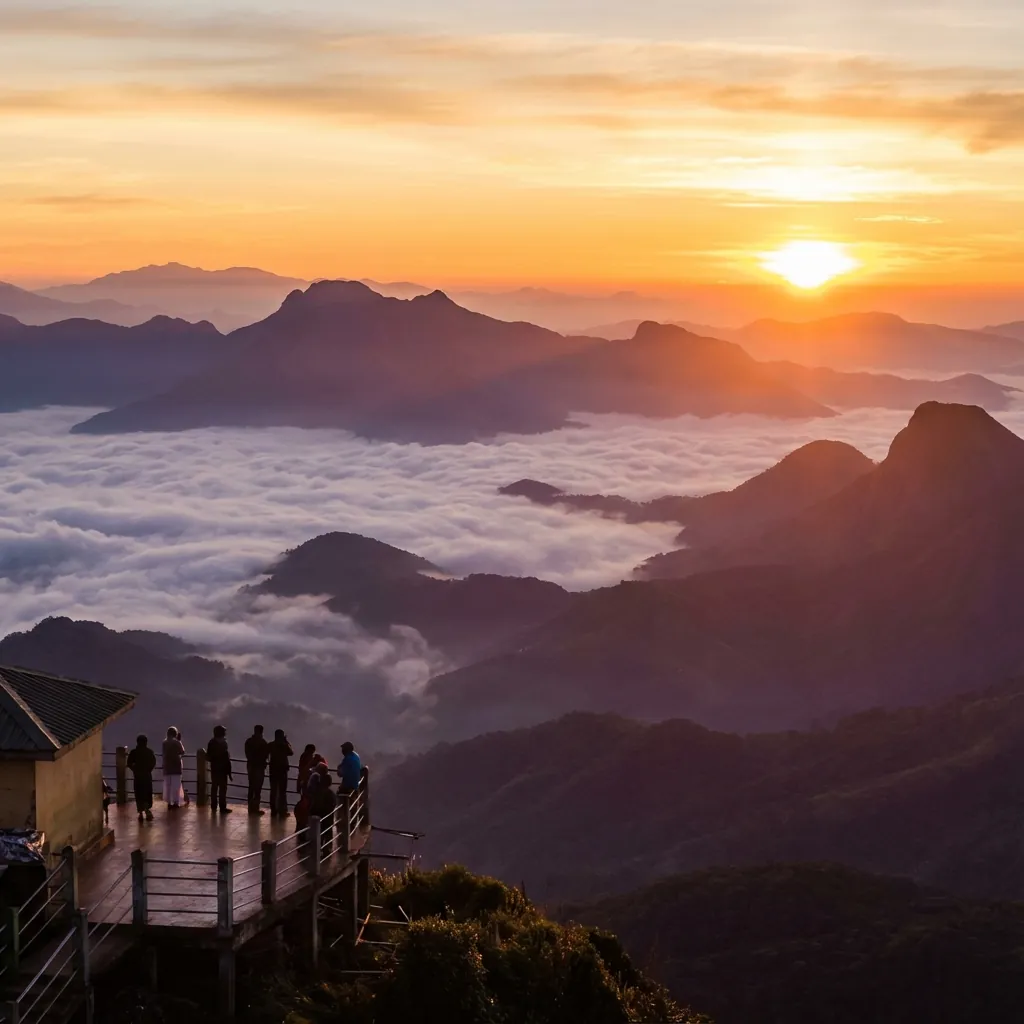
If you are looking up the Adam’s Peak season 2026/27 start date, the date to write down is 23 December 2026. That Wednesday is Unduvap Full Moon Poya Day, and it is the opening of the Sri Pada pilgrimage season. The season then runs through to Vesak Full Moon Poya Day in May 2027.
Those dates come from the Chief Incumbent of Sri Pada, Ven. Bengamuwe Dhammadinna Thera, speaking at the Ratnapura District Secretariat. The Sunday Times reported the arrangements on 8 November 2026. Hiru Gold FM carried the same opening and closing days on 7 November. Neither report published a calendar number for the May close beyond “Vesak Poya in 2027”, so that is the date we are using. Check a current Poya list before you book the last week of the season.
What the season actually changes
Sri Pada, Adam’s Peak, is a pilgrimage mountain for Buddhists, Hindus, Christians and Muslims, all of whom honour the footprint at the summit. Outside the season it is a steep hill with very little support. During the season the Hatton path is lit, tea stalls open along the steps, and simple rest houses give you somewhere to sit. People climb in the dark so they are on the summit, about 2,243 metres up, for sunrise. On a clear morning the peak throws a triangular shadow across the hills below. Cloud is common. A grey dawn is still a proper Sri Pada morning.
The nights that feel crowded are the ones you can predict. Full-moon Poya days and weekends draw the longest lines, especially near the top, where the staircase narrows and everyone wants the same view. A plain weekday, away from a Poya and away from the Christmas to New Year weekend, is the calmer climb. Opening night itself will be busy. 23 December is both the first night of the season and two days before Christmas. Treat it as a pilgrimage night, and pick another dawn if you want more room on the steps.
The Sunday Times also noted the days just before the opening. On the evening of 21 December the relic casket and the statue of God Saman are displayed at Galpotthawala Sri Pada Rajamaha Viharaya in Pelmadulla, and the next morning they go in procession towards the Sri Pada Maluwa. After Vesak they return to Pelmadulla. If you are driving through Ratnapura on the morning of the 22nd, leave extra time.
Hatton and Nallathanniya, or the long way from Ratnapura
Almost everyone who is climbing for the first time should use the Hatton side. You stay in or just above Nallathanniya, which many drivers and older signboards still call Dalhousie, and you walk the stepped path out of the village. In season it is the lit route, with tea stalls and a rail to hold when the concrete is wet. An averagely fit person, walking steadily, takes about three to four hours to reach the summit. Add time if anyone in the group is slower, if you want to stop for tea, or if you are in a queue. People often describe this path as about 5,500 steps. That figure is a familiar way of talking about the staircase. You will not be counting them, and you do not need to.
The way down is the same staircase. It is usually a little quicker, and it is harder on the knees. Shoes with a grip, and the handrail, matter more in daylight than they did at 3am.
The other route visitors ask about is the Ratnapura side, from Palabaddala. It is a longer forest walk, with fewer stalls and a lot more time on your feet. Give it most of a day, go with someone who knows the path, and do not treat it as a casual sunrise the way you can the Hatton steps. For a first climb, Hatton is the route that matches a night start.
The Adam’s Peak destination page has the mountain in the context of a driver and a bed for the night before. Use this article for the season dates and the climb itself, and that page when you are ready to place the night in a wider trip.
The night start
For sunrise on the Hatton path, leave Nallathanniya around 2 or 3 in the morning. Three hours is enough when you are comfortable on stairs and the path is moving. Four hours is the more honest allowance for a mixed group, a tea stop, or a crowded night when you spend part of the ascent standing still. If being on the summit before the sky lightens matters to you, start at the earlier end of that window. There is no prize for arriving at the last minute and climbing the final steps in a hurry.
Sleep in Nallathanniya the night before if you can. The trailhead is a further hop from Hatton town, and a 1am wake-up is kinder when the steps are near the door. Eat before you leave. The stalls sell tea and snacks once the season is open, and you will want cash in rupees for them. Ask the guesthouse that afternoon whether any local collection is being made, and what time the path is expected to fill.
What to wear, what to carry, and how to behave
The village can feel mild when you step outside. The summit before dawn is windy and often damp, and people who were comfortable at the bottom end up cold while they wait for the sun. Take a warm layer you can put on at the top, and a light rain shell. Carry a headtorch even when the seasonal lights are on, so both hands stay free for the rail. Take water. A small pack is enough.
At the summit shrine, shoes come off. Shoulders and knees should be covered, the same standard as other Sri Lankan temples. A scarf in the pack solves it. You do not need to climb in heavy clothes to be properly dressed when you arrive.
Keep your voice down at the shrine. Leave the footprint and its canopy alone. Step aside for elderly pilgrims and for people carrying offerings. If a monk or a steward asks you to move, move. You are a guest on a pilgrimage path.
If your dates fall outside the season
Outside 23 December 2026 to Vesak Poya in May 2027, the lights, tea stalls and rest houses are not part of the bargain. The path is generally dark, the stalls are shut, and a clear sunrise is a weaker bet. Confirm in Hatton or Nallathanniya that the trail is open before you commit a night to an off-season climb.
Getting there: driver first, train only if the notice is clear
A private driver is the reliable way to arrive rested enough to climb. From Colombo, allow roughly five to six and a half hours to Nallathanniya, longer in city rush hour or if rain slows the mountain road. From Kandy, the hill road commonly takes about three to four and a half hours. From Ella, plan a long hill-country day, often around five to seven hours via Nuwara Eliya and Hatton, and leave the climb for the following night. These are ranges. Roadworks and a slow tea-country convoy move them.
The railway needs a separate check. After Cyclone Ditwah, accounts of the Kandy–Ella hill line have not matched each other. Check the latest Sri Lanka Railways notice before you plan around a Hatton train. Our Kandy to Ella train and private-car luggage guide is the companion piece for splitting a rail ride from the bags in the car. When that notice is unclear, take the road. A private driver can bring you from Colombo, Kandy or Ella to the trailhead, wait out the climb, and be there when you come down.
Landing at Bandaranaike International Airport and climbing the same night is a bad join. Book the airport transfer into a night near the steps, then climb.
Tea country, then Christmas on the right coast
A night in Nallathanniya, the sunrise, and then a quiet day in the Hatton tea estates is a kinder shape than treating the peak as a detour between two long drives. Most people want a shower and a meal after the descent, not another sight.
Christmas and New Year sit on a different coast. From December into March the south and west are dry, so Galle, Mirissa, Bentota and Tangalle are the beaches that match the festive fortnight. The east coast, Trincomalee, Arugam Bay and Pasikudah, is in the northeast monsoon then. That fortnight is also the busiest and the most expensive of the year. Book the rooms and the driver early. Whale watching off Mirissa is usually underway by December, which is one reason that bay fills. The month-by-month picture is on our Sri Lanka in December page.
A simple loop: the airport or Colombo, a night in Kandy or Hatton, Sri Pada on a weekday, a day in the tea, then a few nights on the south or west coast, and the airport again. Ask for it as one written plan, with the same car for the mountain night and the beach week.
Frequently asked questions
When does the Adam’s Peak season start in 2026/27?
On Unduvap Full Moon Poya Day, 23 December 2026. The Chief Incumbent of Sri Pada gave that opening, and it was reported by the Sunday Times on 8 November 2026 and by Hiru Gold FM on 7 November 2026.
When does the Sri Pada season end?
It runs until Vesak Full Moon Poya Day in May 2027. The announcements we are using do not add a calendar day beyond that, so check a current Poya list if you are booking the final week.
Which route should we climb?
The Hatton path from Nallathanniya, also called Dalhousie, if you want the lit steps and a sunrise. Allow about three to four hours up at average fitness. The Ratnapura and Palabaddala side is the longer forest route and wants most of a day. First climbs are happier from Hatton.
What time should we start, and what do we carry?
Leave Nallathanniya around 2 or 3 in the morning. Carry a warm layer, a headtorch, water and cash. Cover shoulders and knees for the summit shrine, and take your shoes off there.
Can we take the train to Hatton for the climb?
Only if Sri Lanka Railways says so on the day you need it. Since Cyclone Ditwah, hill-line reports have disagreed. Check the latest railway notice, and keep a private driver as the road option from Colombo, Kandy or Ella to the trailhead.